A Modern Approach to SDR Receivers To Buy For Radio Signal Monitoring
Software-Defined Radio (SDR) is a transformative technology that redefines traditional radio signal processing by shifting much of the workload from hardware to software. The fundamental components of an SDR system include radio hardware, software applications, and computer integration. The radio hardware typically consists of an SDR receiver or SDR dongle, which captures radio signals from the airwaves.
These devices convert analog signals into digital format, enabling software to interpret and process the data. Software applications then enable users to tune into various frequencies, apply different demodulation techniques, and manage overall signal processing. Notably, this integration of hardware and software enables a seamless experience, allowing users to effortlessly adjust settings as needed.
SDR receivers to buy or Consider Today
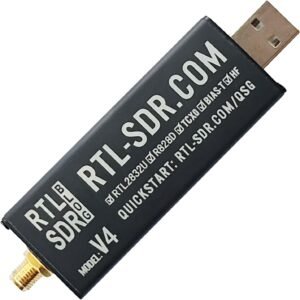
RTL-SDR Blog V4
The version 4 dongle does not require you to set the direct sampling. It will tune into the HF spectrum and above without that setting. This is my favorite one, and I use this one a lot on my projects.
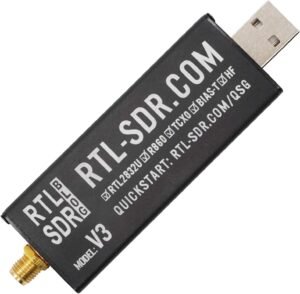
RTL-SDR Blog V3
His dongle is great and has about the same frequency range as the Verian 4 but does require you to set the direct sampling to receive the HF spectrum. However, you can use an upconverter, and some say an upconverter is much better than the direct sampling.
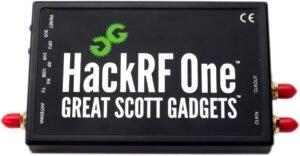
HackRF One
For those looking to dive deeper, the HackRF One is an advanced receiver that costs much more. It supports a broad frequency range from 1 MHz to 6 GHz; it is suitable for many applications like amateur radio and signal analysis. Its SDR capabilities allow you to explore a much wider range of frequencies and formats.
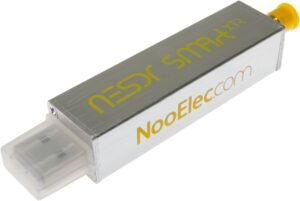
NooElec NESDR Smart XTR SDR
This SDR has some improvements on other designs, including ultra-low phase noise 0.5PPM TCXO, 2 RF-suitable voltage regulators, a custom heatsink, and more. The SDR frequency capability is approximately 65MHz to 2300MHz. The frequency range can be extended down to 100 kHz or lower with the Ham It Up.
SDR receivers are extremely good and can be used for many different applications. Amateur radio operators often use SDR receivers to monitor multiple bands simultaneously and analyze signal activity across the spectrum. Shortwave listeners use SDR receivers to listen to international broadcasts, utility signals, and long-distance radio transmissions. Like I said, I like version 4 because it’s not so pricey unless you’re looking for wider frequency coverage for your project.
Now if you’re wanting something a little simple without having to use your computer for HF listening, I suggest the ATS-25. This radio will receive AM, FM, shortwave, and longwave and is all ready to hook an antenna to and turn on.
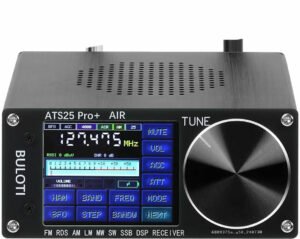
ATS25pro+ Portable Radio
This receiver covers conventional frequency bands such as FM/AM/SW/LW but also has professional aviation band (VHF) reception functions accurately tuned to 118 MHz-135.975 MHz and 144 MHz-148 MHz. GLCSYJF aviation radio can clearly listen to tower instructions and flight takeoff and landing dynamics and communicate with pilots in real time.
The World of SDR Receivers and How They Work
Software-defined radio (SDR) receivers are revolutionizing the way we listen to radio signals. Unlike traditional analog radios, SDR receivers utilize software to process radio signals, providing extensive versatility and functionality. With SDR receivers, users can tune into a vast array of frequencies, from commercial broadcasts to amateur radio, all through a simple interface on their computers or mobile devices.
How SDR Receivers Work
At their core, SDR receivers convert analog radio waves into digital signals, which are then processed and interpreted by software applications. This process allows for a wide range of functionalities, such as filtering, demodulation, and decoding signals without needing multiple hardware components. Users can easily switch between different modes and frequencies, making SDR radios incredibly adaptable for various communication needs.
One of the primary benefits of SDR radios is their flexibility. With the right software, users can access worldwide shortwave broadcasts, scan for local frequencies, and even decode digital signals. Another advantage is the cost-effectiveness; fewer hardware components typically mean reduced costs. Additionally, as software improves and evolves, SDR receivers can be updated at no extra cost, keeping them relevant for years to come. Overall, SDR receivers are a powerful tool for any radio enthusiast, offering an expansive range of capabilities!